Saturday, March 11, 2006

Just for fun...

I'm taking a technology class to clear my teaching credential, and we played with Photoshop for a couple hours this morning. Here's my final product:


What do you think? Should I go for it?

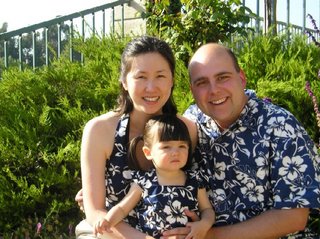
Edit: I guess for any strangers reading this, it's more dramatic if you know what I look like without digital enhancement (and you get to see my lovely wife and daughter, too!):


- "I don't wear a hairpiece!"

Friday, March 10, 2006

Screw the future, we're zillionaires!

I'm getting the feeling that the current adminstration is unaware of the nature of space-time. They seem to be living in an eternal present, disconnected to any past from which lessons can be learned or from any future in which current actions might have some consequences.

Evidence for a disdain of the past has probably been most popularly celebrated in the many comparisons of the war in Iraq to the war in Vietnam. A less obvious but just as poignant observation could be made if we compare the culture of secrecy and acting with impunity to the culture of the Nixon White House that led to Watergate.

What I think is more interesting, however, is the apparent lack of acknowledgement of the future. Time and again, policies have been set forth, stances have been taken, and actions have been approved that seem to indicate that the current administration is unaware of the fact that the world will continue after W's term in office comes to an end, or even that it will come to an end. They seem particularly unaware of the possibility of anyone with whom they are not idealogically aligned ever occupying any position of power in this country ever again.

The latest evidence of this temporal blind-spot is Bush's desire to have line-item veto power. Doesn't he realize that the Congress can't legislate that power for him with the qualifier "this power only applies to conservative republican presidents with ties to the petroleum industry in wartime against a noun such as 'terror,' 'weather,' or 'sadness'"? If he gets line-item veto power, so will all of the presidents who come after him, some of whom he's sure to disagree with on just about every point of import. But he doesn't seem to care...

Coupled with the move to authorize the NSA to spy domestically without warrants, the executive branch has made moves to dilute the power of the legislative branch (line-item veto) and the judicial branch (no warrants). In fact, it seems like this administration has the goal of investing as much power in the person of the president as possible and tilting the system of checks and balances toward the president so far as to threaten upsetting the whole system.

There is, I suppose, a sort of logic to what they are doing: a logic that one would expect to be employed by a 6 year old when they devise a bold plan to raid the cookie jar and assume that they will never get caught because they're so brilliant. They have control of the White House and both houses of congress at the same time. There may not be another opportunity to get the congress to willingly grant a great deal of its own power to the executive branch. The implications of such transfer seem to be moot. Isn't there at least one intern hanging around one of these meetings waiting to see if anyone wants coffee who's saying, "Hey, what if the next president is a democrat, and we still control congress but we've given the president so much power that he can still do whatever the heck he wants?" Shouldn't they be scared to death of setting up just such a scenario?

Or maybe they just don't care. Here's my theory: the actual goal of everything they do is to make sure that they and their wealthy friends get as much cash as is humanly possible in the next two and a half years. At that point, who cares what happens? They're filthy rich! If you have bazillions of dollars, you can pretty much ride above the petty concerns of regular humanity like famine, pestilence and war.

What do you think? It seems to explain a lot of the otherwise inscrutable behavior we see coming out of 1600 Pennsylvania Avenue. The two pronged attack of making sure that the wealthy pay as little as possible for taxes, and then giving as much of the money actually collected from the middle classes to defense contractors and Halliburton sets these guys up pretty nicely for the next 15 or 20 years (or less, if you're Cheney. I mean, how many heart-attacks does this guy have left? Ditto for anyone who goes hunting with him). By embroiling us in a war against a military tactic as oppossed to any actual set of persons (terrorism isn't genetic: you don't have to be born to a terrorist to be able to practice it. Therefore, getting rid of all of the terrorists isn't actually getting rid of terrorism. Milosevic had a much more achievable goal...), they're also setting up a continuous stream of income for all of those guys well into their retirement. It's a perfect plan. The events of 9/11 worked better than the hijackers could have hoped. It put us in the mindset of fear that led us to say "do whatever you want, just protect us from this sort of thing," and then accept unprecedented tax cuts and sketchy justifications for war as being somehow connected to what we were afraid of.

Oh, well, you know what they say: In a democracy, you get the leadership you deserve. I'll bet Iraqis can't wait!

- "No nation is permitted to live in ignorance with impunity." (I'm cheating, this is a historical quote, not from a movie)

Tuesday, February 28, 2006

Instead of a strike...

I have some ideas for action that teachers can take instead of striking to address inequity issues. I've tried to come up with actions that are about denying service to our employers (district, state) while continuing to provide service to our students. Most of these have some sort of financial consequence attached to them, too, which might make them more effective actions:

- What if we refuse to administer Standardized tests? We still come to work, but we just teach on those days and don't do the tests. Far from being something that hurts our students, I think this would actually help them (since taking those tests is of no benefit to them at all), and at the same time throws a monkey wrench into the district and state bureaucracies.

- (This is my favorite) What if we refuse to comply with district requests that we kowtow to "high profile" parents and bend over backward to meet their demands at the expense of the vast majority of our poor students who are not politically connected or economically powerful? What if we instead partner with the Union and the district to encourage those parents to join class action lawsuits against the state and federal governments for not adequately funding education to allow us to provide mandated services to all students? I personally would feel very free to tell a parent that I cannot provide a service to their child that I would not also be able to provide at the same level to every child in my charge with similar needs within the parameters of my contract. Let's turn these parents with financial and political clout into our allies to fight for funding for all students!

Wouldn't that be great? Wouldn't it be worthwhile? Wouldn't it be better directed at those who are perpetuating the problem and victimizing our kids (especially the poor kids) instead of turning those same kids into "collateral damage" in a messy battle that they have no control over?

What do you think?

- "...but you can't make an omelette without breaking a few eggs!"

Friday, February 24, 2006

What if it isn't just a movie...

Suppose you sent a person and then a robot back in time from the future 3 times in order to prevent some calamity, but every time you think you've prevented it, it finds some other way to happen?

Suppose the future you're trying to prevent is the development of computers so sophisticated that they become self-aware and turn on their human inventors?

Suppose you've decided after the first 3 attempts fail, to try a much subtler approach?

If the educational system can be decimated to such a degree that the chances of anyone actually educated under this system being able to develop anything nearly as sophisticated as the machines from the future becomes next to impossible, wouldn't it make sense to send back a killer robot to wreak just such havoc upon the educational system?

That's right, we're all extras in Terminator 4: Return to the Stone Age.

I hope that Arnold is able to get to me before a crazed Sarah Connor breaks into my classroom in combat fatigues and threatens to eviscerate me in front of my students: "It was you! You taught them math! You made it possible! I have to stop you!" If he cuts off his fake skin and shows me his robotic arm, I'll help him take down the system from the inside... not with explosives, but by filling up instruction time with meaningless tests, making it harder for anyone to become a teacher, and using up as much education funding as possible to create tax breaks for the wealthy (as long as they're not wealthy computer programmers).

If it ends with me propped up against a desk, clutching a heavy text-book above the "enter" key set to execute a program that increases community college funds, gasping "I don't know... how much longer... I can hold this..." as underprivileged students dive for cover, then that's just what I'll have to do. .. although I'd much rather be the guy who tearfully lowers Arnold into the steaming cauldron of the hot tub behind his mansion after he saves the world from education.

- "I'll be back."

Thursday, February 09, 2006

Why I Won't Strike: Second Draft

Okay, here's my second draft. I'd appreciate feedback! Feel free to send this to anyone else that you think might have thoughts on this topic. (The first draft is the post immediately preceding this one.)

Funding education is the primary way in which we as a people collectively invest in our children. While everyone is willing to invest in their own education and their own children's education, our fiscal policies betray how little other people’s children are valued; for a budget is surely a moral document, setting forth those things that we deem worth investing in and those we begrudgingly allow to pick up the crumbs which fall from the table. Children are politically and economically weak and vulnerable, and the machine that drives our policy is at best indifferent (but more often hostile) to the needs of a demographic that doesn't vote, pay taxes, or contribute to political campaigns.

That is why I am a teacher. In a world where children receive a clear message that they are not valuable to society at large, my hope is that my presence, my work, and my care for my students communicates to them that one person, at least, does value them and has chosen to link my life and my fortunes to theirs. The ethos of the teaching profession is a frank rejection of the prevailing culture’s assumption that our career paths are determined first and foremost on the basis of economic factors, since all of us have a degree of training and education that would qualify us for a substantially higher pay scale in the private sector. A teacher’s salary does not represent fair compensation for services rendered, for if it did, we would surely be paid far more. Instead, our salary allows us to spend our time in the classroom with our students rather than being forced to go out and find other employment to provide food, clothing and shelter for ourselves and our families. This stance makes us vulnerable, for the powers that be know that a people driven by compassion for those they serve will not readily forsake those served for their own economic self interest. Our willingness to forego a higher paying career for the sake of our vocation opens us up to be taken advantage of by those who are counting on our unwillingness to abandon our students.

So, how are we to respond when our vulnerabilities are exploited? One option is to call their bluff, and walk out on our position, forcing those who hold the purse strings to meet our demands or lose our services. This option is an attempt to turn an inherently weak and vulnerable position into one of strength; to use threats and power to force others to our will. If we take this path, we offer validation to those who operate under the presumption that might makes right by adopting their methods as our own.

I will not take this path. It is true that our children are not valued, and they are left weak and vulnerable to those mercenaries in power whose influence is available to the highest bidder. By virtue of my education and socio-economic status, I have access to the benefits that the system holds out to those as fortunate as I have been. My students do not have the options that I have. I choose, therefore, to throw in my lot with my students, to let their fortunes be mine, to give up the level of control over my own life that society offers to me and instead subject myself to the caprices of the powerful. I will raise my voice to decry the injustices that marginalize my students and their families, but I will not abandon my students when those same injustices throw my life into the same kind of uncertainty that is their daily reality. I am a teacher, and my professional life is lived for the sake of those I serve. Though they are despised by society, I honor them, and to the extent that I am able to join them in their suffering, I receive it as an honor that the world at large cannot recognize, but which is of greater value than any concessions that can be won by the threat or enactment of a strike.

- "If might is right, then love has no place in the world. It may be so, it may be so. But I don't have the strength to live in a world like that..."

Tuesday, February 07, 2006

Why I Won't Strike

I wrote a while back about my struggles over the question of whether to join in a strike if it comes to that in my school district. Here's where I've landed after a lot of reflection, discussion, and prayer. This is a first draft, so I'd appreciate your input, especially since I'm thinking of reading this at our union general assembly where we're supposed to vote on whether to grant strike authorization to our negotiating team. (First of all, I think it's much too long, so I'd appreciate you letting me know what points seem worth making and what seems to just be repetitious or tangential. Any other feedback would be great, too!)

Education is not valued by our society. Everyone values their own education, and their own children's education, to be sure, but when it comes to funding the education of other people's children, our budget betrays our values; for a budget is surely a moral document, setting forth those things that we deem worth investing in and those we begrudgingly allow to pick up the crumbs which fall from the table. This relegation of education to the basement of our fiscal priorities is evident when we look at the budgets and policies of government at national, state, and local levels.

Funding education is the primary way in which we as a people collectively invest in our children. The woeful state of education funding is direct evidence of how little other people's children are valued at a political and economic level. Children are politically and economically weak and vulnerable, and the machine that drives our policy is at best indifferent (but more often hostile) to the needs of a demographic that doesn't vote, pay taxes, or contribute to political campaigns.

That is why I am a teacher. In a world where children receive a clear message that they are not valuable to society at large, I hope that my presence, my work, and my care for my students communicates to them that one person, at least, does value them and has chosen to link my life and my fortunes to theirs. We all know that the ethos of the teaching profession is not driven by economics: all of us have a degree of training and education that would qualify us for a substantially higher pay scale in the private sector. For us, our salary does not represent fair compensation for the services we render, for if it did, we would surely be paid far more. Instead, our salary allows us to spend our time in the classroom with our students rather than being forced to go out and find other employment to provide food, clothing and shelter for ourselves and our families. This stance makes us vulnerable, for the powers that be know that a people driven by compassion for those they serve will not readily forsake those served for their own economic self interest. Our willingness to forego a higher paying career for the sake of our vocation opens us up to be taken advantage of by those who are counting on our unwillingness to abandon our students.

So, what are we to do? One option is to call their bluff, and walk out on our position, forcing those who have the power to determine our financial fate to deal with us or lose our services. This option is an attempt to turn an inherently weak and vulnerable position into one of strength; to use threats and power to force others to our will. This brings us into the extended family of those who embrace force and power as the means to enforce our will on others. We make ourselves distant cousins to both those who set US policy in Iraq and Afghanistan on one side and with the leaders of the street gangs with whom we too often find ourselves in direct competition for the loyalties and future of our students on the other. We at once validate their methodology and deny our own better selves by declaring that yes, strength is the ultimate arbiter of truth and the arena for deciding our values.

I will not take this path. It is true that our children are not valued, and they are left weak and vulnerable to those mercenaries in power whose influence is available to the highest bidder. By virtue of my education and socio-economic status, I have access to the benefits that the system holds out to those as fortunate as I have been. My students do not have the options that I have. I choose, therefore, to throw in my lot with my students, to let their fortunes be mine, to give up the level of control over my own life that society offers to me and instead subject myself to the caprices of the powerful. I will raise my voice to decry the injustices that marginalize my students and their families, but I will not abandon my students when those same injustices throw my life into the same kind of uncertainty that is the daily reality my students live with. I am a teacher, and my professional life is lived for the sake of those I serve. Though they are despised by society, I honor them, and to the extent that I am able to join them in their suffering, I receive it as an honor that the world at large cannot recognize, but which is of greater value than any concessions that can be won by the threat of a strike.

- "If might is right, then love has no place in the world. It may be so, it may be so. But I don't have the strength to live in a world like that..."

Wednesday, January 04, 2006

I have a dream... but it's turning into a nightmare!

So, when you think of segregation, what part of the country do you think of? Alabama? Mississippi? Surely somewhere in the deep south.

Try San Francisco.

That's right, my hometown, which loves to extoll itself as the most progressive and liberal city on earth, is resegregating at an alarming rate. What is happening?

My theory is that it's all well and good to talk about desegregating other people's children, but when it comes right down to it, parents want their own kids to go to the "best" schools that they can possibly get into. The "best" schools are usually defined as those with the best test scores, which (surprise!) tend to be those with the biggest proportion of white and asian students (at least in SF).

The progressive-ness of San Francisco has led to a highly-educated, politically-savvy, upper class that is hard pressed not to use their education and political clout to get their kids into the "good" schools. The school district has chosen for years to bow to the pressure of the powerful at the expense of the poor and politically powerless.

San Francisco is like those people who were radical in the 60's but joined the establishment, became invested in the status quo, and now are conformed to an unjust system while still liking to reminisce about the old days and think of themselves as still being radical. We think of ourselves as being in the vanguard of the fight for the vulnerable, but we're invested in the system now, and we'll sell out the poor if it means a better resume for our kids. We used to be reviled for the danger we posed to the powers that be. Now we ought to be despised for our hypocrisy.

- "They call me MISTER Tibbs!"

Tuesday, January 03, 2006

Who do I have to piss off to get my phone tapped?

Here's the way I thought things were: the government (local, state, federal) isn't allowed to spy on me (i.e. wiretapping, etc.) unless they have a warrant from a judge based on their being enough evidence to suspect me of being involved in or planning illegal activity.

Is that what you thought, too? I mean, isn't that what the vast majority of us who have no formal legal training but have access to Court TV and watch Law and Order think? I've talked to several of my friends who actually are attorneys, and that's what they thought, too.

Apparently, that's what the media thought, too, because when they found out that it wasn't the case, they thought it was worth reporting.

And, it seems that the President thought that we thought that, too, because he got really mad at the press for telling us that things weren't the way we thought they were. In fact, he called letting us know that the government thinks it's allowed to spy on us in ways that we all thought were illegal was a "shameful" act, that caused "great harm" to the country.

Let's examine just what the President considers to be greatly harmful. First of all, the information "leaked" was not that the government is allowed to spy on people. We already knew that; we've all seen the TV shows with the Feds in an unmarked van, shirtsleeves rolled up and headphones pressed to their ears as they listen to a mobster order pizza or a hit on someone. What was leaked was the fact that the President had signed an executive order giving the NSA authority to go ahead and spy on people without bothering to get a warrant from a judge.

We'll talk about whether or not that was a reasonable thing for the President to authorize in a bit, but first I want to let you know what bothers me the most about this situation. The President thought that the safety of our country depended on us, the citizens of this country, going about our daily life believing that the government's authority to spy on us was limited in a way that he contends it was not. Whether or not his actions were in fact legal is beyond the point. What is important is that he knew that we thought the government wasn't allowed to spy on us without a warrant, and he thought that it was necessary for US citizens to believe that they had a certain freedom that he contends they did not in fact have in order for those same citizens to be safe. Let me say that another way: The President said that for the government to be able to do its job, we citizens had to believe that we were safer from our own government than we actually were. He brazenly proclaimed that it is shameful to inform the citizens of a constitutional democracy of the true extent of the government's authority to invade their lives.

That just boggles my mind. The government can't work unless the citizens are deceived about what authority the government actually has? What the heck?

Okay, that was the main thing that I wanted to say, and you can stop reading now if you want. I will continue, however, to briefly explore the reasonableness of the order in the first place, whether we were allowed to know about it or not. It may seem reasonable, when we consider that in the time it takes to find a judge, present evidence to them, have the warrant written up and delivered and the surveillance actually started, the critical information may have already been passed. Clearly, the current style of terrorism we are trying to defend against needs the flexibility to begin surveillance immediately without waiting for a warrant.

Guess what? That was already covered under the law. The governing statute (called FISA) gave federal agents a 48 hour window between the time they started surveillance and the time they obtained a retroactive warrant. So the immediacy was not the issue at hand.

So what possible motive could the President have for signing this order, and continuing to renew it whenever it expired over the last 4 years? I can think of two possible reasons. The first is laziness. There are so many people to spy on, so much moving around, judges are hard to find... let's just cut through the red tape and free up some more agents to man the unmarked vans instead of interrupting the judge's tennis game or cocktail party to get a warrant signed.

The second reason I can think of is a little more disturbing: The whole reason a warrant is required is that law enforcement has to convince someone who is an expert in the law (i.e. a judge) that there's compelling evidence that the person in question may be involved in something illegal. It's possible that the NSA wanted to spy on people for reasons that are not legally compelling. What reasons could they have? Race, religion, country of origin? Political affiliation or published dissent against the government or government officials? For those of us who think that history is worth remembering, the name J. Edgar Hoover comes to mind when we hear about a federal agency spying on US Citizens for reasons less than legally compelling, and the name JosephMcCarthy is recalled when we see people being prosecuted on the basis of suspected associations.

I've got another name to throw out at you: Saddam Hussein. Saddam had over the course of years created a web of protection around himself so tight that he was practically invulnerable to any domestic attack. He had unlimited authority to spy on his own citizens, and he was able to indefinitely detain anyone he suspected might be part of some plot against him, even without presenting compelling evidence to a legal expert (like a judge). I'm not saying that Bush is Saddam, not by a long shot. What I'm saying is that Saddam's Iraq is what lies at the end of the road that we as a nation have taken the first several steps down as a response to the fear that has been driving us since September 11th. It's a long road, and for the moment, we are still safeguarded against the tyrrany and despotism that plagued Iraq under Saddam. But those safeguards are being tested and chipped away at, and all in the name of protecting us from our enemies. A free press that is regularly cut off from information and labeled as shameful enemies of our security who cause harm to our nation by telling us what is true is the first step toward a press controlled by the state as a propaganda tool.

Freedom comes at a price, but it's a price worth paying. The fiction that we can surround ourselves with a wall of security that cannot be breached leads us down a road that ends in tyrrany and despotism, of a fear of our leaders and neighbors that is far more horrible than the fear of terrorism that is sending us hurtling down the treacherous road without our headlights on. The danger you flee from is not more dangerous than the danger you run into because you're always looking over your shoulder.

- "We cannot defend freedom abroad by deserting it at home."

Monday, December 26, 2005

Where's the love?

What's up, people?

I was enjoying a Christmas Eve dinner with my mom's family, when several of my relatives let me know that they enjoyed reading my blog.

This was nice to hear, though a bit jarring, since as far as I was able to tell, the only people who ever read my blog were my brother and a fellow named "Anonymous."

Now, if there were only two people reading these entries, that would be fine with me, since I mainly use this blog as a place to talk to myself and sort out my thoughts. If someone else reads it and enjoys it or is provoked to thought, so much the better.

It's a little disheartening, though, to find out that people have been reading it but have not been moved to the point of giving any sort of electronic feedback. If anyone is reading this, then the opportunity exists to enter into a dialogue of sorts with the reader, and it saddens me somewhat to learn that there have been several such opportunities lost over the last year.

I have read other blogs where someone has received 234 responses to an entry that consists entirely of the words, "The Lakers suck!" I do not expect that all of my entries will be worthy of such an effluence of support or derision, but I do harbor some small hope for the occassional "heck yeah!" or "You suck!" or even "V1@gra with no pr3scr1pti0N!"

So, if you find what you're reading compelling, entertaining, or non-boring enough to actually come back to and read more than once, please let me know what you think or at least just say "hi" so I know who's reading. It would be nice to know that my ranting is not such an isolating exercise as I have imagined it to be thus far.

- "When I touch you... I think about myself..."

Monday, December 12, 2005

On the definition of Clemency

So, Arnold denied Tookie, and he will most likely be dead this time tomorrow.

The hullabaloo surrounding the impending execution has raised some interesting lines of thought in my own mind. Let me start by saying that although Tookie continues to protest his own innocence, he is being treated as if he is guilty, so I will forward my arguments as if he actually is guilty of these crimes, though I know there exists the possibility that he is not.

First off, I'm oppossed to the death penalty, period. I think my attitude is summed up best by Karl Malden as a priest during the first season of "The West Wing," when he paraphrases Romans 12:19 for the President ("'Vengeance is mine,' thus sayeth the Lord") and then interprets it into the more colloquial "only God gets to kill people."
A less straightforward version of a similar argument is found in The Lord of the Rings (in the movies, Gandalf tells it to Frodo in the Mines of Moria, in the book, he tells him at his house, but it's the same conversation). Frodo finds out what a danger and force for evil Gollum has been, and says that "It's a pity Bilbo didn't kill him when he had the chance." Gandalf replies, "Pity? It was pity that stayed Bilbo's hand. Many that live deserve death, and some that die deserve life. Can you give it to them, Frodo? Do not be too eager to deal out death in judgment." We must never forget that what we call "justice" is only part of what real justice is, and the far poorer part, at that. Real justice would restore to life those who were unjustly slain. That is justice that would lead to thanksgiving, joy, and celebration and a fullness of life that might do something to curtail the hardness of heart and poisoning of the soul that is the unavoidable effect on the executioner, no matter how justly the executed may deserve death. As it is, the best we can do in our pursuit of justice is to sow the seed of destruction a little bit wider, and do nothing to restore life tragically cut short.

I didn't always hold this view. I used to be an adamant supporter of the death penalty, and I understand the arguments for it, and I even believe that it is a subject upon which reasonable Christians can differ legitimately. There is a lot of biblical precedent for it (even though it's pretty much exclusive to the Old Testament which offers a whole host of offenses punishable by death that we would be appalled to see carried out anywhere in the world today), and there's even a philosophically sound (if inherently unprovable) argument that it results in less deaths as a deterrent to crime. No less a Christian philosopher than C.S. Lewis makes a compelling case for the legitimacy of the death penalty, and I do not question his credentials as a faithful man of God whom I admire greatly and count among my chief influences when it comes to matters of theology. I could have endless arguments over these points (and would love to have them with anyone who's interested, just e-mail me! I just don't want to try and address every argument in one blog posting), but my basic arguments will inevitably return to those stated above (just a warning).

Anyway, back to Tookie. I found it interesting that most of the arguments for clemency were based on a picture of him as having been "redeemed" by the life he's led since being convicted. He's renounced his former lifestyle as a big-time gang leader and written several children's books which dissuade young people from the gang lifestyle. My reaction to this has undergone some development. At first, I found the arguments compelling. But then, I started to think about it, and I found some holes in the argument. First of all, I myself do not endorse the gang lifestyle, and in my profession as a high school teacher I urge young people strenuously against it. I haven't written any children's books, but that has more to do with the level of talent that I have. Surely the argument is not for Tookie to be granted clemency because of his talent as a writer.

So, does the attitude I hold and the action I take to promote it make me an extraordinary human being? Does it make me so remarkable that the guilt I would incur from a crime as heinous of murder should be in some measure balanced by it? I don't think so. In fact, I think that merely not holding these views or doing what little I can to act against them would be placed on the opposite side of the scales, and I am in fact just doing the minimum expected of a decent human being, not an extraordinary philanthropist.

"Well," you say, "the thing is that Tookie is able to affect so many more people with his message because of who he is and where he's coming from, and so he's actually able to do more good than you by the stand he's taking and the word he's putting out." Hmm, it seems that the argument is that Tookie's past full of violence and murder is actually being counted as a positive assett on the scales of justice. I've gotta say, I've got a problem with that.

If the only argument that will save Tookie is that he doesn't deserve to die, then I'm afraid that there are a lot of people that will fall victim to the death penalty because they do deserve to die, and there will be no argument to be made for them.

In recent years (since the Supreme Court reinstated the death penalty in 1976), cases made for clemency at state and federal levels have focused on finding some flaw in the way that the case was prosecuted. "Clemency" has been asked for to prevent a miscarriage of justice.

But if there has been a miscarriage of justice, then staying an execution isn't "clemency" at all! It's actually justice. The governor or President aren't given the authority to give every death penalty case a final once-over to check for mistakes; this isn't about quality control. They are given the power to grant clemency: that is, they are allowed to intervene in cases where justice as defined by our legal system actually does result in a conviction without errors or appealable problems with the prosecution of the case. "Clemency" is defined as "disposition to be merciful and especially to moderate the severity of punishment due ." Clemency is about mercy, but we've turned it into a last chance at justice. By definition, the punishment addressed by clemency is "punishment due." It's appropriate and proper to exact such punishment, and clemency knowingly acts against that.

So what do I think? I think Tookie is probably guilty, and I think that no amount of realizing he is wrong "makes up" for his crimes. Even if he was not guilty of the specific crimes he was convicted of, his life as a co-founder of the Crips has introduced into our world a degree of vilolence and death that he surely bears a great deal of responsibility and guilt for. Does he deserve to die? Probably. Should he be killed? No. Not because he's such a great guy now, but because "only God gets to kill people." It's possible (however unlikely) that if released he would kill again, so don't release him. I think that as a Christian, I cannot wish for or enact any human being's death, because I belong to Christ and have been called to follow his teaching and example in all things. If the parable of the unforgiving servant isn't clear enough, we see his own reaction toward those who put him to death unjustly: he petitions his father the judge for clemency on behalf of his own murderers. It is clear that we are all under sentence of death, and our only hope is the clemency of our God. Shall we who have been forgiven so much turn around and demand the blood of fellow sinners... shall we imperil our own forgiveness by hardening our own hearts?

- "My father and my brother were killed by guns. They were on the right side but that didn't help them any when the shooting started. My brother was nineteen. I watched him die. That's when I became a Quaker. I don't care who's right or who's wrong. There's got to be some better way for people to live."